Most thermal label failures happen before the roll is ever loaded. The print smears, the printer throws a media error, the barcode won't scan at the receiving dock, and the fault gets blamed on the printhead. Usually it isn't the printhead. It's a wax ribbon paired with a synthetic facestock, or a gap-sensor roll fed into a printer that needed a black timing bar, or a 1" core rolled to the wrong outside diameter for the machine it has to run on.
Four spec decisions determine whether the media works: direct thermal or thermal transfer, the facestock, the ribbon, and the roll geometry with its sensor type. We walk through each of them the way we do on the phone with a customer who has a fulfillment floor to run.

Whether direct thermal or thermal transfer is right for you comes down to how long the label has to stay legible and where it lives while it does. Direct thermal has no ribbon. Chemistry in the label darkens under the printhead, and the image fades over time under heat, UV, and friction.
Thermal transfer uses a ribbon to melt ink onto the label surface, so the image survives years and rougher environments. The field defaults to thermal transfer because it "lasts longer." For short-life shipping, that default costs money you don't need to spend.
Short-life, indoor, cost-sensitive per label. A shipping label dropped in 48 hours doesn't need a ribbon behind it. Neither does a pick-ticket that gets pulled off a tote at the end of the shift. If your labels never see a warm truck, a windshield, or a solvent, direct thermal saves you the ribbon inventory and the ribbon changeovers.
Anything the label has to survive. Heat, UV, solvents, abrasion, freezer, cryogenic, long-term asset tracking. DOT for drum labeling, GHS for chemical, BS 5609 for marine. MIL-SPEC and UID/IUID for federal asset tracking. Retailer RFID mandates that require encoded thermal transfer. If the image has to last past the label's shipping route, ribbon.
On most category pages, "custom" means picking a stock size from a dropdown. That's a sizing option, not custom manufacturing. What custom actually means at a manufacturer breaks into three shapes.
The first is blank rolls, spec'd for your printer fleet, that your operation prints in-house with direct thermal or thermal transfer. Sizes, cores, and unwind matched to the machines you actually run. This is the majority of thermal transfer label manufacturer volume, and it's what most stock resellers sell.
The second is pre-printed thermal labels: your logo, brand color, spot color match, and layout printed by flexographic or digital press, with a designated zone your thermal printer overprints with variable data, barcodes, lot codes, or serialized RFID. One roll, one supplier, no color drift between reorders. This is where four-color CMYK with up to four spot colors and spot color matching actually matters.
The third is clear thermal transfer labels on film for premium packaging, pharma vials, and cold-chain applications, which get their own section further down because the mechanics differ. RFID inserting and encoding to GS1 standards happens on the same roll a Zebra or SATO overprints later.
The ribbon decision gets less attention than it deserves, and more real failures start there than anywhere else. Ribbon and facestock get spec'd together, never separately, because a mismatch is exactly the moment a barcode stops scanning. Here's the tree in operational terms:
Cheapest per foot, prints dark on paper, right for corrugated shipping labels that only need to scan once. Smears under friction and won't survive solvents. Pair with paper facestock, never with synthetics or clear film. This is the ribbon buyers reach for when a wax-resin roll costs more, and it's the one that reprints the run when the labels arrive smeared.
The middle case, and the right answer more often than most buyers assume. Survives moderate abrasion and light chemical contact, prints cleanly on synthetic facestocks like polypropylene and polyester, pairs with most clear films. If your labels see handling, humidity, and the occasional splash, this is usually the ribbon.
Highest cost, highest durability. Chemical drums, medical device, outdoor exposure over years, cold-chain, MIL-SPEC. The tradeoff worth naming: resin runs slower on some printers and wears printheads faster than wax. It is not a free upgrade. If the label lives on a shipping carton, resin is durability you paid for and threw away.
If your labels have to survive an autoclave or a wash-down, the ribbon question changes again, and the adhesive question comes with it. More on both below.
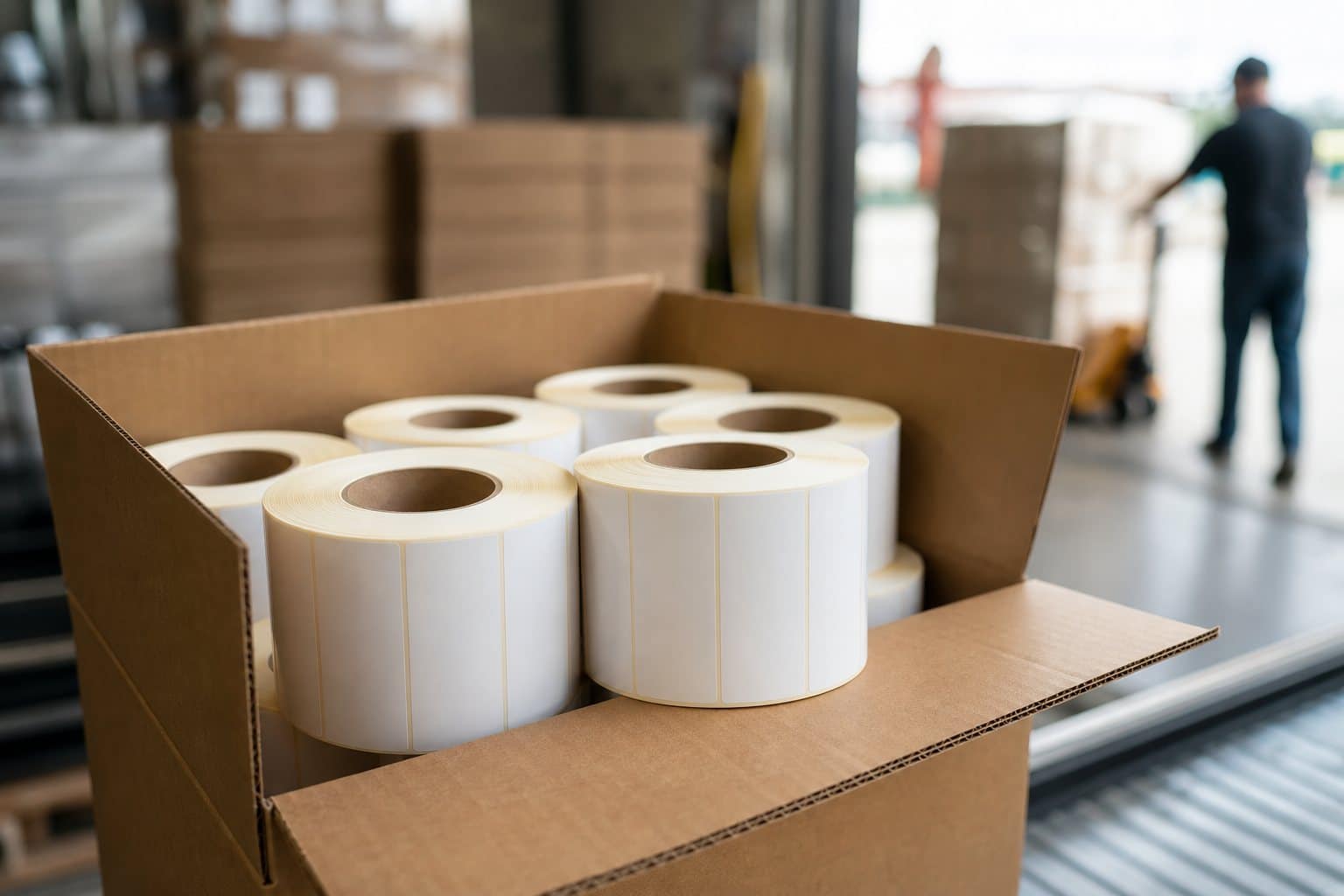
Roll geometry is the fourth spec decision, and it's the one that shows up as "printer error" when it's really a purchasing decision. Core size sets your roll capacity: a 1" core caps around 250 labels per 4x6 roll at 5" outside diameter, while a 3" core gets you to about 1,000 labels at 8" OD. That's four times fewer roll changes on a busy line, if the printer takes a 3" core in the first place.
Wind direction (in or out) has to match the printer's media path. Perforation between labels lets a picker hand-tear at the tote.
Common sizes cover most of what a floor runs. 4x6 shipping, 4x8 thermal labels for larger shipping and industrial applications, 2x1 and 2.25x1.25 for barcode and inventory work, and small-format for asset tags, vials, and syringe flags. Custom die sizes are a phone call, not a catalog restriction, and we finish in rolls, sheets, or continuous fanfold depending on how the line consumes them.
Then there's the sensor. Gap sensors read light through the liner between die-cut labels. Black-mark sensors read a printed timing bar on the back of the liner.
Notch sensors read cut-outs. Continuous rolls and clear stock force black-mark: get this wrong and the printer either reels through the entire roll looking for a mark it can't see, or feeds one label and stops with a media error. Sensor type belongs in the spec, not on the troubleshooting call.
On printer families, thermal transfer specs are standardized enough that the same roll runs across the mainstream fleets (Zebra, SATO, Datamax, Honeywell, Brady, TSC) provided the core, width, unwind, and sensor are matched to the machine. Tell us the printer model and we'll confirm before we quote. Our printing and finishing capabilities cover the roll geometries most operations run.
The short answer is yes. The long answer is three things have to be true. First, the sensor has to be black-mark, because a gap sensor cannot read through a transparent liner and label. Second, the facestock has to be film (polypropylene or polyester), because "paper" is opaque by definition. Third, the ribbon has to print readable ink against a transparent background, which usually means wax-resin or resin. Wax prints too light to read against clear film, and the result looks like ghost text on a window.
The search term trips a lot of buyers. Paper is opaque by definition, so clear stock is film: polypropylene for most applications, polyester where chemical or heat resistance matters more. Direct thermal clear film exists, but the image reads hazy and translucent rather than transparent, because the reactive coating that makes direct thermal work isn't fully clear. If the label has to disappear into premium packaging or show a vial's contents through the label, that's thermal transfer on clear film with a wax-resin or resin ribbon.
Pharma vials, IV tubing, and syringe flag labels where the container has to stay visible. Cold-chain samples where the barcode has to survive freezer transitions. Premium beverage and cosmetic packaging where the label reads as part of the bottle rather than stuck onto it. One detail worth naming: adhesive show-through. A permanent acrylic that looks fine under a white paper label leaves a visible halo under clear film, so the adhesive gets spec'd for the surface and the substrate together, not one at a time.
Thermal transfer earns its ribbon most clearly in environments that would erase a direct thermal image inside a shift. Freezer-grade adhesives grab at room temperature and hold below freezing. Cryogenic adhesives survive vial and biobank storage down to liquid nitrogen temperatures, provided the label is applied above freezing so the adhesive can wet the surface.
All-temperature adhesives cover cold-chain applications where the label is applied warm and lives cold. Wash-off adhesives handle returnable containers that get reclaimed.
Facestock and ribbon get chosen alongside the adhesive: polyester film with a resin ribbon for chemical drums and outdoor exposure, UV coating or overlaminate where abrasion is the failure mode, and durable constructions for DOT drum labeling, GHS chemical, and BS 5609 marine contexts where the variable data has to survive what the label survives.
One language note: we say water resistant and moisture resistant, never waterproof, because "waterproof" is a claim no honest converter should make about a pressure-sensitive label.
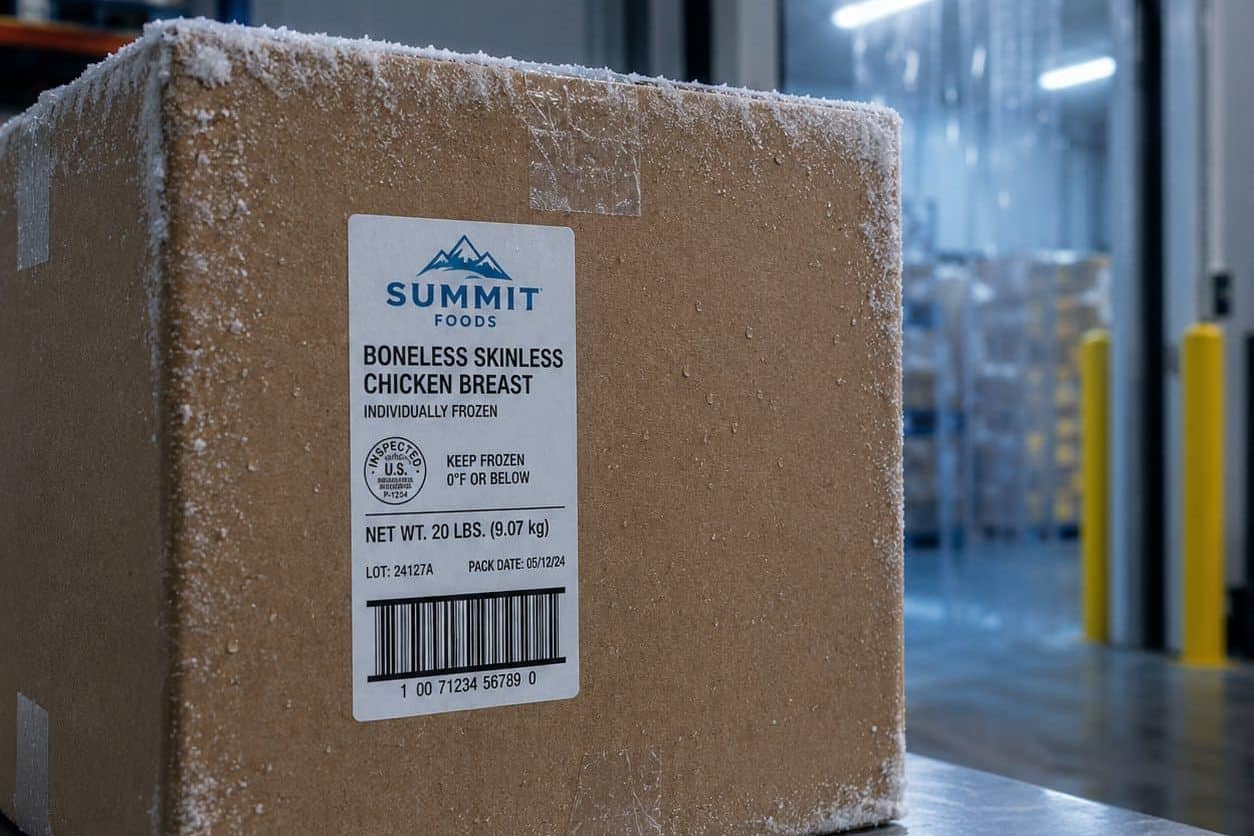
Your printer runs out mid-shift and the backup roll is the wrong core. That's a supply-relationship problem, and you can't Prime-ship your way out of it. What actually solves it: storage and release programs where we hold inventory against your pull schedule, standing orders for recurring users, and job specifications plus physical samples retained from prior runs so reorders come out consistent without re-specifying.
Lead times are competitive, and the team regularly accommodates rush requests. The illustrative moment: a customer's line was going down and they needed millions of labels in 48 hours to keep it running. We built the run and got the labels on the truck.
That's not the standard turn time (nothing is 48 hours as a standard), but it's the capacity we hold for accounts that need it. The federal spec-conversation story that follows is another version of the same posture.
A federal agency arrived with an RFQ citing a specific durable material and requiring extreme durability against weather and temperature. On review, an alternative material would perform identically to the branded spec at 33% lower cost.
We proposed the alternative, the agency accepted, and it became our largest federal contract to date. The lesson we take from that job, and from the ones that came after it: customers often come to us with a spec, and sometimes the better answer is a different material.
Independently owned since 1969, with 150+ years of cumulative team experience and customer retention approaching 100% among active accounts. No minimum order quantity. Quality system rooted in the principles of ISO 9001 quality management and cGMP-style process control.
SBA HUBZone certified, which matters to prime contractors working small business subcontracting goals. Details on how we approach the work sit on the About page.
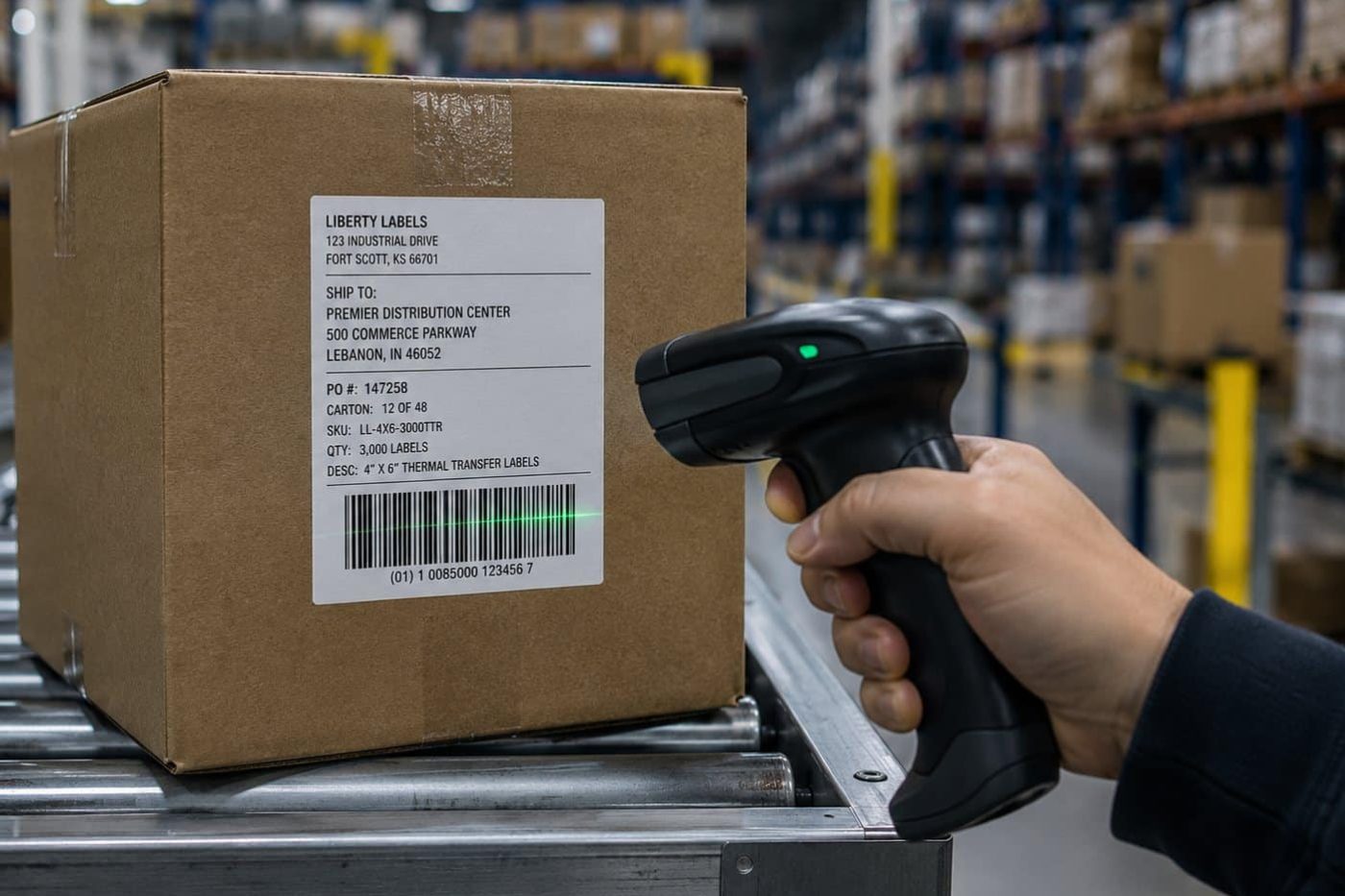
Direct thermal has no ribbon. Chemistry in the label darkens under the printhead, and the image fades with heat, UV, and friction. Thermal transfer uses a ribbon to melt ink onto the label surface, so the image survives years and rougher environments. Direct thermal fits short-life shipping and inventory. Thermal transfer fits everything the label has to survive.
Yes. Ribbon and facestock get specified together, because mismatches (wax on a synthetic, resin on a paper roll that didn't need protecting) are where barcodes fail and printheads wear out. Tell us the environment and the printer, and we pair the ribbon to the roll.
Yes for the mainstream thermal and thermal transfer families (Zebra, SATO, Datamax, Honeywell, Brady, TSC) provided the roll is spec'd correctly. The details that matter are core size (1" or 3"), width, unwind direction, and sensor type (gap or black-mark). Send the printer model and we'll confirm before we quote.
Yes. That's one of the most common custom thermal transfer jobs we run: brand graphics and spot color matched by flexographic or digital press, with a designated zone your thermal printer overprints with variable data, barcodes, or serialized RFID encoded to GS1 standards. One roll, one supplier, no color drift between reorders.
Yes. Cold-temperature options include freezer-grade adhesives, cryogenic adhesives for vial and biobank work, and all-temperature adhesives for cold-chain where the label is applied warm and lives cold. Facestock and ribbon are chosen alongside the adhesive so the print survives what the label survives.
Yes. Storage and release programs, standing orders, and vendor-managed inventory are how we serve most recurring thermal transfer accounts. We hold job specs and physical samples from prior runs, so reorders come out consistent without re-specifying.
Yes. Samples for printer testing are part of the spec conversation, not a separate ask. It's the honest way to confirm feed behavior, print darkness, and adhesion before you commit to a roll count.
From your carrier's account program. UPS, USPS, and FedEx all provide printable thermal shipping labels to shippers with account-based label printing. That's a carrier product, not a converter product. If you need branded, pre-printed, or non-standard-size thermal transfer for shipping, that's a different conversation.
Bring the surface, the environment the label lives in, the printer family you run, the service life the label needs, and what "custom" means for your line (blank, pre-printed with a variable-data zone, RFID-encoded, non-standard size). We'll spec facestock, ribbon, adhesive, roll geometry, and sensor type from there.
No minimum order quantity. Competitive lead times, with rush capacity when a line is going down.
Samples for printer testing come before the commit. Request a quote and we'll start with the application.
Request a Quote