
Cannabis and CBD labels belong closer to pharmaceutical and chemical work than to the sticker vendors that crowd this category. The way they fail is the same: a wrong warning, a lifted corner on a cold-stored concentrate, a batch code that smudges on a mylar bag. None of those are simple reprints. They're compliance problems, and the label is what an auditor looks at first.
Most advice in this category comes from people who sell stickers. That's a different job than manufacturing a label built to hold together across a multi-state program.

Who is responsible for what on a cannabis label?
The brand's regulatory or legal team owns required content. That means the warning language, the universal symbol, the potency and cannabinoid disclosures, the multi-serving statements, the FDA and FTC exposure on any CBD claim. What is prohibited and what is required in a given state is a legal question, and the answer changes state by state and sometimes quarter by quarter. A printer that offers to write that copy for you is offering a liability it cannot carry.
The manufacturer owns something narrower and testable: whether the required content prints legibly at the point size the compliance team specified and whether the run stays consistent from proof to reorder. That is where a documented quality system does real work. Ours is rooted in the principles of ISO 9001 quality management and cGMP-style process control, with documented procedures, in-process and final inspection for print accuracy, color matching, material conformance, adhesion, die-cut accuracy, and readability, and lot-level traceability with samples retained. That’s designed to give a compliance team something to audit against, not to replace them.
Consider a CBD tincture SKU shipping into four states. Maryland requires cannabinoid and terpene concentrations displayed on the panel. Massachusetts requires specific dosage information and a multi-serving warning. Two other states carry their own combinations of warning text and symbol placement. The container is the same, the artwork is largely the same, and the brand's compliance team has documented exactly what each state requires. That is not four SKUs. That is one SKU with a variable panel.
Variable data lets one artwork carry the fixed content while the state-specific panel swaps on press. Serialization and QR links to a certificate of analysis run in the same mechanism. When the mandatory copy gets dense enough that no reasonable point size will fit on the primary label, an extended-content or booklet construction gives the compliance team the real estate they need without shrinking the disclosures below legibility. The alternative, which we see brands default to, is spinning up a separate job per state and paying for four artwork sets and four plate charges when one plate and a variable panel would carry all four. That cost is invisible until you multiply it by reorder cadence, and by then a program's margin is already being eaten by its label workflow.
A 5-point warning statement that reads cleanly on a designer's monitor at 200% zoom is not the same file that reaches a press impression on a matte facestock. Dot gain compresses fine lines. Register tolerances that pass on a large graphic can lose a symbol's readability at small point sizes. Ink hold-out varies with the facestock, and the difference between a warning that a compliance auditor accepts and one that fails inspection can be the third color pass at a specific screen ruling.
This is the part of the job that a documented quality system exists to catch. In-process and final inspection covers print accuracy, contrast, and readability against the approved proof, with samples pulled and retained across the run. On our pharmaceutical and chemical work, that discipline is what carries GHS pictograms and pharmaceutical dosing panels through production at point sizes cannabis buyers will recognize.
Design intent is not the same as production fidelity. The QA that catches the difference is a documented procedure.
Before naming any material, name what the label has to survive. A flower jar sits on a dispensary shelf. A concentrate container sits in a cold case with residual oil on the outside. A tincture rides through a refrigerated pick line and ends up in a customer's bathroom. A mylar bag flexes every time it is picked up. Each of those is a different label problem, and the same construction will not carry all of them.
The real problem is mandatory-copy density, not shelf appeal. Options: an extended-content booklet or peel-and-reveal construction, which buys the compliance team the surface area to keep warnings at a legible point size, or a shrunken single-panel design that fits on the jar and may not survive a readability inspection. The booklet costs more per unit and needs a die investment. The single panel saves money and puts the compliance team at risk.
Anything oily. Options: a BOPP facestock with an aggressive permanent adhesive and an overlaminate for solvent and abrasion resistance, or a synthetic paper with a UV-cured varnish. The BOPP-plus-overlaminate holds. The synthetic paper looks fine on day one and will not survive a solvent wipe.
Refrigerated and frozen environments break the wrong adhesive. Options: a cold-flex or all-temperature adhesive matched to a facestock rated for condensation, or a room-temperature permanent that will lift a corner at the first thermal cycle. We describe these as moisture-resistant, never waterproof.
Adhesion to low-density polyethylene and foil laminates is its own problem, and the print method decision (direct thermal for short-life fulfillment coding versus thermal transfer for durable retail copy) changes the material stack under the ink.
A tamper-evident is a label construction. A sticker applied over another sticker isn’t the same thing. Options: a tamper evident construction that leaves a "VOID" pattern on the container when removed, a security overlay across the closure, or a security slit that destroys the label when removed. The container often decides which of the three fits.
Aesthetic finishes exist. Foil, spot UV, embossing, holograms: they all have a place on a cannabis label if the container can carry them and the environment will not undo them. A lot of small brands overspend on foil finishes that will fail an adhesion test on a cold-stored concentrate container, and a supplier that recommends a single "best" material with no tradeoff attached is telling you something about how carefully they read the spec. On a federal contract, we found an alternative material that met the requirement and performed identically to the brand named in the spec at 33% lower cost. That kind of substitution is normal when the spec is written to a material rather than to the requirement it is trying to solve.
Most brands treat track-and-trace as a software decision, something the point-of-sale or seed-to-sale system handles. It starts earlier than that, on the label. The barcode structure has to carry the data the state system will read, the batch and lot codes have to print at fidelity that scanners can resolve, and any QR link to a certificate of analysis has to survive whatever the container will encounter. Variable data on the press covers serialization; GS1-compliant barcode structure is the standard state systems build against; and RFID encoding is available where a program requires it.
What sits behind that is retention. Job specifications and physical samples are kept from prior runs, which means a reorder is built against the same construction that shipped last time, not a fresh spec. Lot-level traceability with documented production records is the mechanism that lets a compliance team answer an auditor's question about a run that shipped nine months ago. That is a manufacturing capability.
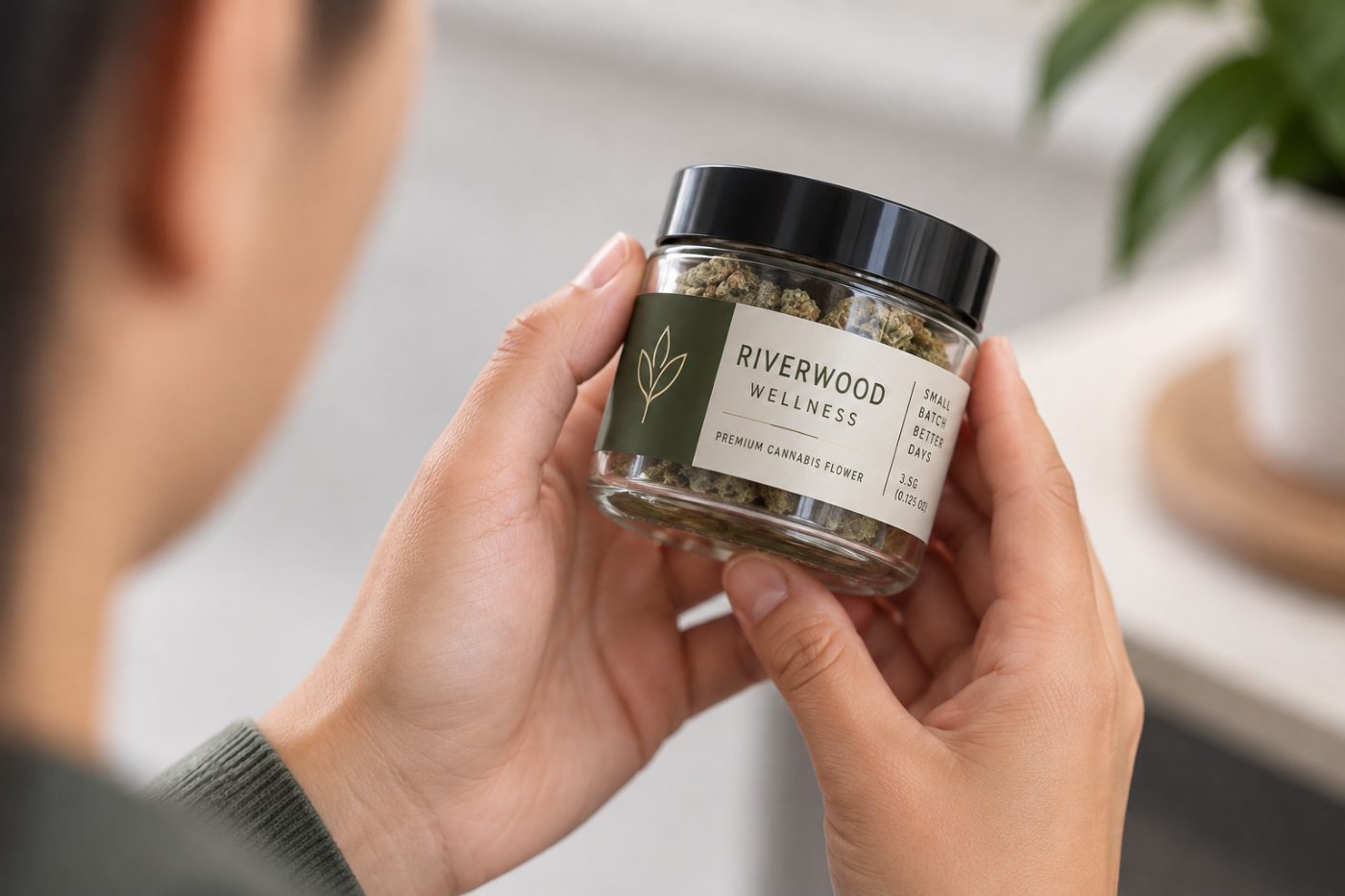
Category labels change; container dimensions do not. A chilled cannabis-infused tincture is a cold-chain label problem regardless of what is inside. Edibles inherit the moisture, condensation, and freezer considerations that shape food packaging. Beverages inherit ice-bath adhesion and condensation behavior. If the environment is the constraint, the neighboring pages on our product lines for food, beverage, and supplement work carry the depth on those requirements.
The rulebook that governs what has to appear on the panel is category-specific and changes state by state. The rulebook that governs whether the label stays on the container is written by physics.
Independently owned since 1969. More than 55 years in the label business, with no private equity roll-up and no revolving management. A team carrying 150+ years of cumulative label industry experience. Customer retention approaching 100% among active accounts. A quality system rooted in the principles of ISO 9001 quality management and cGMP-style process control, with documented procedures, supplier qualification, in-process and final inspection, lot-level traceability, and CAPA. FSC® chain-of-custody certified since 2022, with FSC® certified materials available on request. Adjacent regulated categories already served include pharmaceutical, chemical, agricultural, and federal government work under compliance frameworks that include DOT, GHS, and BS 5609.
The honest read on that list: cannabis-specific specialization is a thin pitch, because the state rulebook keeps changing. Adjacent regulated-category discipline is a more honest one, because the discipline does not. A brand shortlisting a manufacturer for a program that has outgrown its first supplier is shopping for the discipline. You can read more on our background and ownership if that context matters.
The brand's regulatory or legal team owns required content and any state-specific rules. We’re not saying that to shift responsibility; it is a legal reality. Our job is to ensure the required content prints legibly, stays consistent across the run, and documents that against a quality system your compliance team can audit.
Yes, through variable data on one artwork rather than a separate job per state. When the state-specific panel is dense enough that no reasonable point size will fit on the primary label, an extended-content booklet or peel-and-reveal construction is usually the right answer. The variable data mechanism also manages serialization and QR links to a certificate of analysis on the same run.
That is a print fidelity question, and it is answered by in-process and final inspection against the approved proof for print accuracy, contrast, and readability. Small mandatory copy on regulated panels is standard practice on our pharma and chemical work. Samples are pulled and retained across the run, which is how a compliance team gets an artifact if a question comes up later.
Yes, as construction. Security slits mean the label is destroyed when removed, security overlays across a closure, and printed tamper-evident facestocks are all available. The container usually decides which fits. A tamper-evident sticker applied on top of another sticker is not the same thing and usually is not what a mature program wants.
Yes: variable data, GS1-compliant barcode structure, RFID encoding to GS1 standards, and QR-linked panels for certificate-of-analysis lookup. The brand's compliance team tells us what data the state program expects to read, and we build the barcode and variable data to carry it. Retained job specifications keep reorders consistent with the first run. We work with your design and packaging team to come up with labels with a dedicated block for lot and date coding, ready to be imprinted at your facility using thermal transfer overprinting, inkjet coding, laser coding, or hot stamp date coders — whatever method your packaging line runs. The label material and layout are matched to your imprint method so the code stays legible.
No minimum order quantity. A first-run SKU is a reasonable place to prove out a construction before it goes to volume, and that is often when it makes sense to test whether the facestock, adhesive, and print method actually hold up in the environment the container will see.
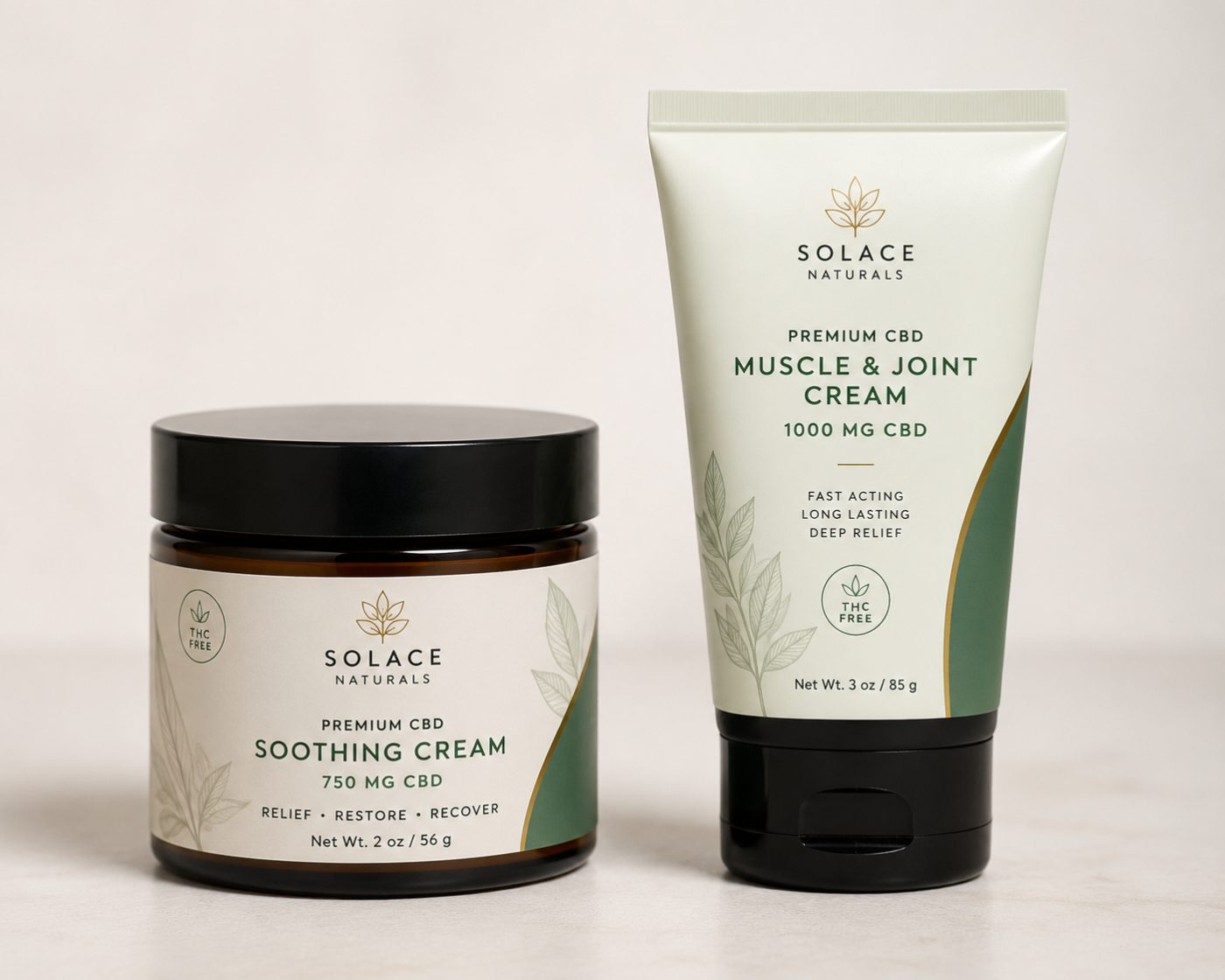
For a pilot run on one SKU into one state, a sheet-label catalog is a reasonable answer. The workflow starts to break when the program is multi-SKU, multi-state, and carrying real audit exposure, and when retention and lot traceability become questions the compliance team needs answered. If that is where your program sits now, the first conversation is easiest if you bring the container, the environment it will see, the state list you ship into, and a copy of the label file that is not quite working. You can start it on our Request a Quote page, and we will take it from there.
Request a Quote